

by Eda Arduman, MA Clinical Psychology, PACT Faculty, Level 1 Instructor
One of the most common things I hear in couple therapy? “I’m just trying to explain myself.” And very often, the other partner’s experience is, “You’re coming at me.” Both are true because intimate partners influence each othe...

This month PACT Certified therapists and faculty offer their perspective on a common what-if scenario some couples in distress face, whether the challenge comes when they least expect it or when one partner finally realizes they cannot resolve the issue on their own.
When one partner says no to t...

Early in a relationship, the goal is not to force certainty too quickly. It is to build a foundation that makes trust, collaboration, and repair more likely over time. In the PACT model, secure functioning means both partners actively work to create a relationship in which each person’s safety, dign...
by Stan Tatkin, PsyD, MFT, PACT Developer
There is a particular kind of couple case that makes even seasoned clinicians quietly dread the session clock. You know the one. Progress is made, sometimes good progress. And then, just as you’re about to land the plane, one partner reaches back into the p...
by Stan Tatkin, PsyD, LMFT
By now, most PACT therapists are familiar with the practice of videotaping sessions. For some, it has become second nature; for others, it still feels uncomfortable or cumbersome. Yet videotaping heightens your PACT skills. It is one of the most powerful tools we have fo...

by Stan Tatkin, PsyD, MFT and Developer of PACT
Can two people build a shared life around a nonnegotiable issue? If you are asking, “Can we make this work without either of us betraying ourselves?”, understand that not every conflict is a problem to solve by compromise; some require a deeper decis...
by Stan Tatkin, PsyD, MFT
Introduction
PACT begins with a non-romantic premise: the human nervous system develops in attachment relationships and depends on co-regulation and social-emotional development for survival and functioning. However, under conditions of stress, the nervous system prioriti...

by Liane Daiter, OT Reg. (Ont.), SEP, PACT Level 1 Clinician
Do you ever wonder what you and your partner (romantic or otherwise) are actually doing together? What purpose does your relationship serve?
Stan Tatkin, founder of a Psychobiological Approach to Couple Therapy® (PACT), emphasizes the im...

Hans Jorg Stahlschmidt, PhD, PACT Institute Dean of Students and Faculty, Senior Core Faculty, Senior Instructor
A familiar moment in couples therapy: the couple is stuck, and the therapy doesn’t move forward.
You’ve prepared. You’ve assessed. You’ve listened carefully. You’re tracking the sequenc...
by Eva Van Prooyen, MFT, PACT Certified Therapist
You’ve done it! You’ve found the “love of your life” and ceremonially declared your love by promising “forever and ever, ‘til death do us part” with your “one and only.” Now what?
The final scene of a fairytale or rom-com fades off into a beautifu...
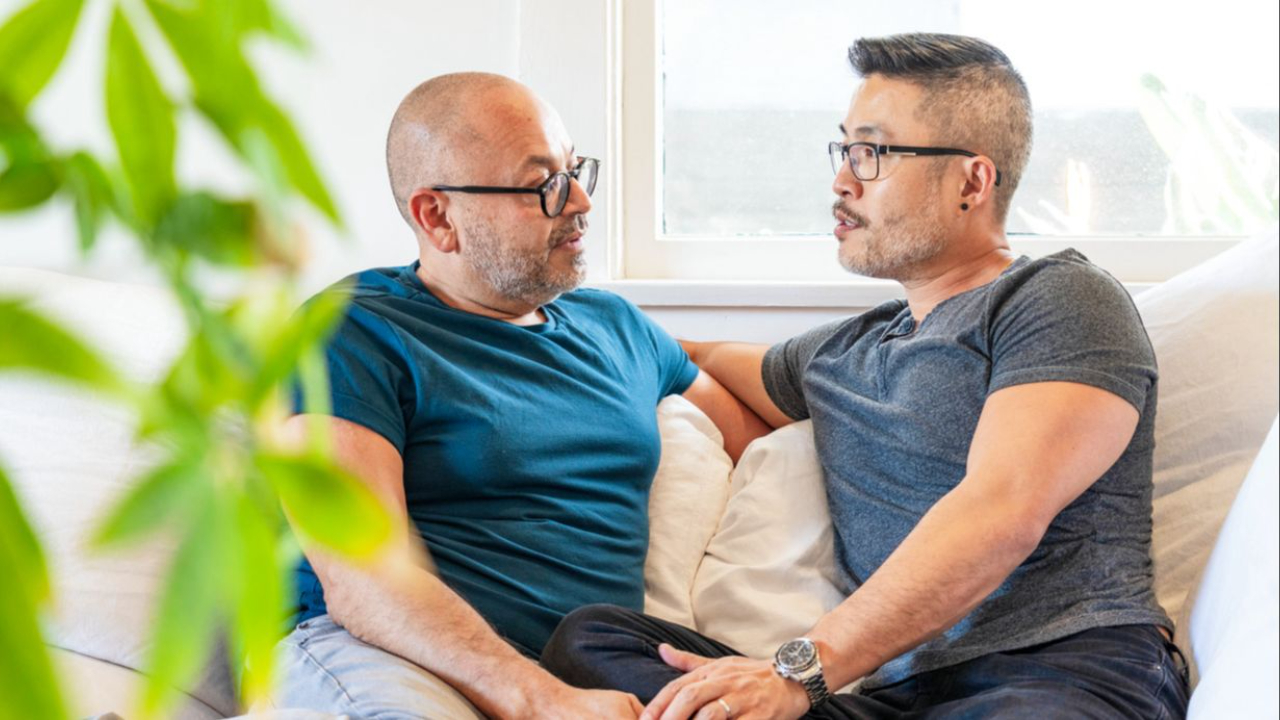
Every couple hits bumps in the road — misunderstandings, mismatched expectations, and moments when stress or fatigue lead to conflict.
What sets thriving couples apart isn’t the absence of disagreements. It’s how they approach them.
Stan Tatkin, PsyD, MFT, developer of the Psychobiological Appro...

By Dahlia Greenbaum, MA, LMFT
PACT Level 3 Clinician
A Psychobiological Approach to Couple Therapy® (PACT) and Sensorimotor Psychotherapy (SP) are two therapeutic modalities that provide robust ways to treat clients with a variety of presenting symptoms and problems, using an integrated approach of ...
